
Alcohol, DJing, and Mental Health: The Conversation No One’s Having
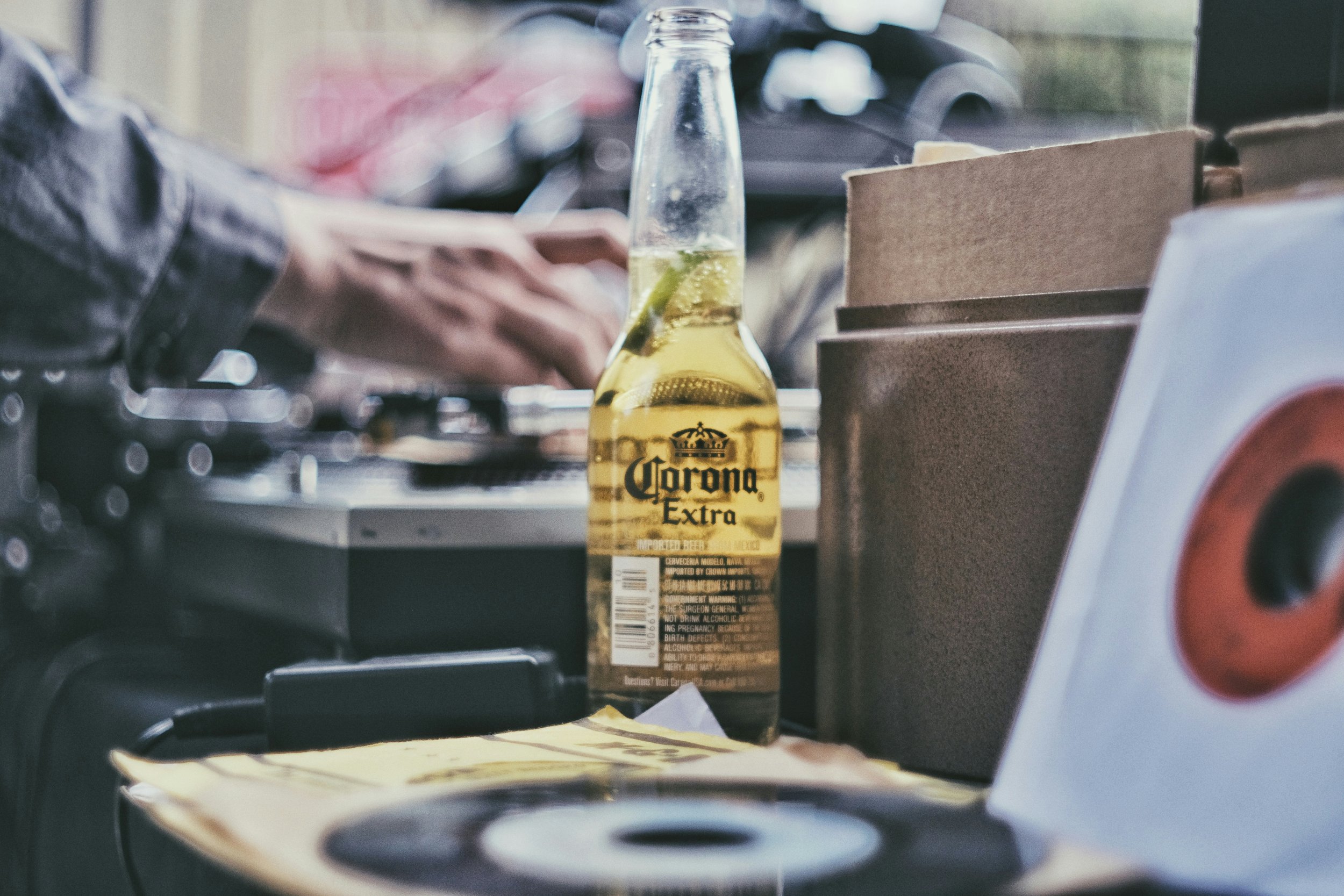
Think booze is helping you connect, relax, or perform better? Think again. This post explores how alcohol quietly sabotages your creativity, focus, and mental health as a DJ. Discover practical ways to cut back without losing your edge, and improve your performance on stage and in the studio, protecting your long-term success as an electronic music artist.
Alcohol: The Truth we Don’t Want to Face.
This is a topic that I feel few DJs will want to explore, maybe because I feel we’re all secretly scared to learn just how much something we love is negatively impacting our career, possibly even our entire life.
When I discovered the impact that alcohol had on my mental health, I felt deflated. In short, I learned that alcohol is one of the worst things you can put in your body, period. Surprisingly, it even ranks higher than heroin and methamphetamine. The fact it’s an integral part of our culture is one thing, but it’s perhaps more alarming that being a DJ is one of the few “jobs” in the world where drinking on the job is celebrated, even encouraged.
So yes, it’s nice to have a drink whilst you play. But let me be real with you. If this is habit? If you need a drink in order to play? Your mental health will only ever be stable, at best. And at worst? Well, you don’t have to look very far to see artists who have quit because of it, or worse, are no longer here on earth with us because alcohol (and/or drugs) quite literally destroyed their life.
The Sobering Reality
It’s a sobering fact, and one that many try to play down as unimportant. The “Oh, but it won’t happen to me!” is a common thought. But here’s the thing… When shit gets hard, when your tour or release schedule loads up, when your health and relationships suffer, and alcohol is the crutch, the vice, or the tool you use to cope or enjoy life?
You’ll find yourself with a challenging life and a highly ineffective way to cope. A coping strategy that is quite literally deteriorating your mental health and making it harder for you to do what you love.
I could loop drugs into this conversation too, but this is something I will explore separately, as alcohol is by far the one that affects us most, both in severity and by population.
So What Can Be Done?
Changing your behaviour around alcohol will feel easier to some than others. For me, this was one of the hardest habits to change (and I was smoking meth most weekends for 10+ years), so that may give you some indication. However, it’s not impossible. And I’ve known friends to quit cold turkey, with seemingly no real worry at all. So don’t believe just because it was hard for me or anyone else that it will be hard for you.
The most important ingredient for change to occur though? Honesty. Honesty to yourself, first and foremost. You cannot change this (or any behaviour) until you are willing to be radically honest with yourself. You must get honest about how much it’s impacting you.
Is it impacting your mental health? (It certainly is if you drink regularly.)
Is it impacting your sleep?
Your loved ones?
Your career?
Finances?
Health?
These are all major factors to consider, and albeit challenging to truly explore for two reasons:
a) You’ll never really know how much alcohol is affecting you until you’re out the other side, so to speak.
b) Exploring the truth of this is often confronting, which may appear to have an initial detrimental effect on your mental health.
While looking at alcohol’s impact on your life may be difficult initially, it’s an important and necessary step if you really want to get your mental health back on track.
Take The Small Wins
Now, while becoming sober might appear to be a worthy goal for some, it may feel like too much of a jump for others, which is why this particular article is about giving you the first step, along with a few tips to help you along the journey. Drinking less alcohol, in this instance, becomes a win.
If you were to define your goal by saying you’re only having 10 drinks a weekend when you would usually drink 20 or more? That’s massive.
If you were to only have 2 drinks maximum every time you play when you usually have no limit? That’s powerful.
If you were to stop drinking during the week and only then on weekends? Again, a big win.
The idea here (in this early stage) is improvement. And sometimes, when mental health is at an all-time low, an easier goal becomes far better than a goal that seems out of reach, like sobriety.
Within this context, there is not one goal that’s better than another, because improvement (when it’s done from a space of honesty and committed action) will serve you well long-term. An whilst it may seem like a great approach to go for the quick wins like feeling better, what all humans want at the end of the day is to be able to sustain that good feeling.
As mentioned previously, this article is not meant to be a complete picture, nor is it a foolproof guide to clearing your mental health up for good. It has its loopholes (like keeping alcohol on the table, as one example), but I hope it serves as a turning point: the launchpad for you to address what you’ve previously suppressed, or perhaps never been truly aware of in your life.
Four Simple Steps to change
1. Radical Honesty (with yourself)
Honesty is the foundation piece for all lasting change to occur. You don’t have to change anything today, simply tell yourself the truth. You might like to write this in a journal, or even speak these words out loud to yourself by either recording a voice note, a video, or simply stand in front of a mirror and speak these answers out loud. (Don’t sugar coat it, say or write the difficult thing!)
Ask yourself the following. How is alcohol affecting:
Your mental health?
Your sleep?
Your energy?
Your focus?
Your gigs?
Your relationships?
Your creativity?
Your ability to bounce back after a gig or a release that didn’t go so well?
You cannot intervene in a world you cannot see, so until you are willing to be honest with yourself, nothing will change, at least not long-term.
2. Radical Honesty (with someone else)
Say it out loud.
Tell one person you know, love and trust. Maybe it's someone you meet through the tonic community (coming soon!) or a trusted support person.
The most important factor here is that you feel safe with this person. Because when you feel safe enough to share your truth, and you’re witnessed in sharing this truth, the guilt and shame you’re unconsciously holding dissolves. When that happens, you're no longer carrying this alone, and you will feel more free. This does wonders for your mental health.
The strongest people in this industry are the ones who are connected with others, who have someone to talk to openly and honestly. Superficial conversations and party friends are great. But if you are closing off how you really think and feel in order to protect your identity/ego, you are building yourself a prison that is slowing eating away at the rest of your life.
3. Create ONE New Behaviour.
Not ten. Not a complete overhaul. Just one.
Examples:
“Two drinks max when I play.”
“No drinking during the week.”
“I'm cutting my usual weekend intake in half.”
“I will enjoy one drink after my set, not before.”
Your nervous system responds to safety, not pressure, and these small steps compound. So two drinks might feel safer to your nervous system than going without completely. At least initially. Do this consistently, and you will a new level of trust in yourself and your mental health will start to improve.
4. Execute With Grace (Not Perfection)
Change is rarely linear, and it's certainly not a highlight reel for Instagram. It's messy AF because you'll almost certainly have moments where you'll slip back into old patterns. That is not failure. It’s called being human. And what you're actually learning to do is exist in life (and behind the decks) without depending on alcohol.
So when you slip up, give yourself some grace and forgive yourself.
During my journey into creating a healthier lifestyle, I slipped up and ended up on bender more times than I could count. Once the bender was over, I would often stand in front of the mirror and say something like "I slipped up, and I'm fucking human. I am a work in progress. I forgive you."
Then I would review what I was working towards, and remind myself why this is important. Then, I would reach out to one of my chosen friends who I'd been honest with about what I was going through and let them know about what happened and how I was feeling.
Having an open dialogue about the challenges in my life had more of a positive impact on my mental health than I initially realized, because it factored in connection and helped me clear any guilt or shame I was carrying, giving me an opportunity to get back on track quickly. When I didn't open up, I'd hide away from the world, feel guilty and mentally beat myself up for what I'd done and the next few days would be hell.
When Behaviour Isn’t the Whole Story
On your journey to a better relationship with alcohol, it’s natural to hit a wall. You might find yourself wondering why it’s so hard to stop, or why you crave it in the first place. That’s where this next part comes in.
Changing alcohol purely by addressing the behaviour alone can be done, but it won’t always have lasting effects. Traumatic experiences often have a lot to do with addiction/dependency, so you may find that until you address the root of those traumatic experiences, you’ll be somewhat bound to behaviours that can seem impossible to break. Or, sometimes you’ll simply find yourself swapping one addiction with another.
That said, it would be remiss of me not to mention the importance of asking for help here.
You don’t have to do this alone. If you feel stuck, or feel it’s consuming you more than you’d like and you can’t seem to find a way out, please ask for help.
You can find some relative links for support in Australia, UK & USA here, as well as a global service for anyone outside of those countries.
If you feel drawn to it, I highly recommend working with Alexi Panos and Preston Smiles via The Bridge Method. This is not a sponsored link, just my own personal recommendation based on the impact that these two humans had on my life. I wouldn’t be here today without them, and the Bridge Method was just one of the foundational pieces for my life to transform in the way it has.
My Personal Thoughts on Addiction.
I personally do not believe anyone is an addict. I believe we are all human, and have become addict-ed to something (or someone!), but we’re not less than because of it. Claiming that you are an addict, while it is widely celebrated as beneficial, becomes rather limiting further down the track.
Does it help initially? It sure can! But, it simultaneously keeps a person trapped in believing they are less than what they actually are. You are, we all are, first and foremost, human beings. In a deeper sense, we are all life. Believing that you are anything less than that is yet another wall that prevents you from truly freeing yourself in this lifetime. And when you are not free, you will swap one addiction for another. You may address the behaviour (alcohol as an example), but you will become dependent upon something or someone to help sustain that change in behaviour, rather than feeling free and in control of your own existence.
There is nothing wrong with this, if that is what you choose for yourself. I’m not here to dictate what you should do, nor to judge your decisions. Rather, I’m here to offer perspective based on what I’ve learned and what has worked for me through my own experience, and how I’ve helped many others.
For that reason, I never refer to myself or someone else as an addict, because we are all so much more than that. In fact, I’m yet to meet a single human being that isn’t currently (or hasn’t been previously!) addicted to something or someone; basically saying, we’re all suffering and finding ways to cope. That’s what addiction is: a coping mechanism to address one or more ‘life problems’.
As mentioned earlier, the root cause of addiction is often past traumatic experiences, so if you find this topic relatable, it’s worth seeking support from trauma-informed coaches like Preston and Alexi, or even therapists.
I also do not believe one person’s addiction is better or worse than another. Just because I was addicted to alcohol and certain drugs (meth as one example) doesn’t make me better or worse than someone who, say, is addicted to heroin. Putting yourself on a pedestal, or thinking you are less than because of what you’re addicted to, only leads to separation and disconnection; both of which are fundamental pieces of the journey out of addiction.
I repeat the point I made above: you are human. You are not better than or worse than any other human on this planet. We are all equal. Whilst we may not appear equal based on the family we were born into, ability, or any other perceived limitations, we are. We are all souls having a human experience, and figuring this whole life thing out along the way.
Final Words
So what does all this mean in the context of our world: the clubs, the festivals, the after parties, and the culture we move in? It means we have to start seeing the full picture. Not just the fun, but the potential fallout associated when the fun becomes integrated as a coping mechanism to deal with life itself.
There is much to be said about alcohol, addiction, and trauma. I could probably write a book about the impact alcohol has had on the electronic music industry alone, citing the enormous benefits as well as the many downfalls.
In the industry, it has long been used as a tool for connection. It can help us relax. It brings people together. It ignites dance floors. And fuck, I’ll speak from a big part of the collective here: we’ve had some fun!
But the other side of the coin must be examined, especially if your mental health is a constant battle and you care deeply about having a long career in electronic music. At some point, you’re going to have to choose whether you want your mental, physical, and emotional health to improve, stay the same, or get worse.
For me, I had to make a decision. Keep alcohol in play and struggle through my career, or take it off the table and go for being the absolute best I can be, both as an artist and as a human being. I’ve did the balancing act for years, and have discovered that I just work better without alcohol.
I found that alcohol is like the one big domino: the one you push at the start to make everything else fall down. Changing your behaviours around alcohol will absolutely impact every single aspect of your life.
There are the benefits everyone talks about: better health; more money; improved sleep; stronger relationships with loved ones; increased focus, to name a few.
Yet there’s also the downside: social interactions can become less bright initially. Then there’s that moment of feeling disconnected from everyone else when they’re drunk or high and you’re not. And I’m not going to pretend that DJing without alcohol wasn’t difficult for me at first either! It took practice to become comfortable, but eventually I became more confident and happy behind the decks without needing to drink.
In time, I found deeper connections and felt more comfortable in social situations when other people were drinking or taking drugs and I wasn’t. The absence of alcohol forced me to look after myself so I could feel calm whilst in the studio or on stage without relying on it.
I’m not going to lie. It takes work. But this is what the tonic is all about: helping you identify what’s hurting you, and giving you the opportunity to learn from others who understands what you’re going through because they’ve navigated the journey already.
When you voice the challenges you face as you along the way: it becomes easier. But even admitting you find it hard to exist in the electronic music world without alcohol can be fucking tough. But doing so helps you let go of some of the weight you’ve been carrying, allowing your mind and body to find peace.
That in itself is magic no words could ever describe.
I believe in you,
Adam Cox.